
About Amy Pescaglia, LPC, MEd, E-RYT
A whole-person, wellness-model approach to therapy — meeting you where you are and supporting a return to living beyond surviving.
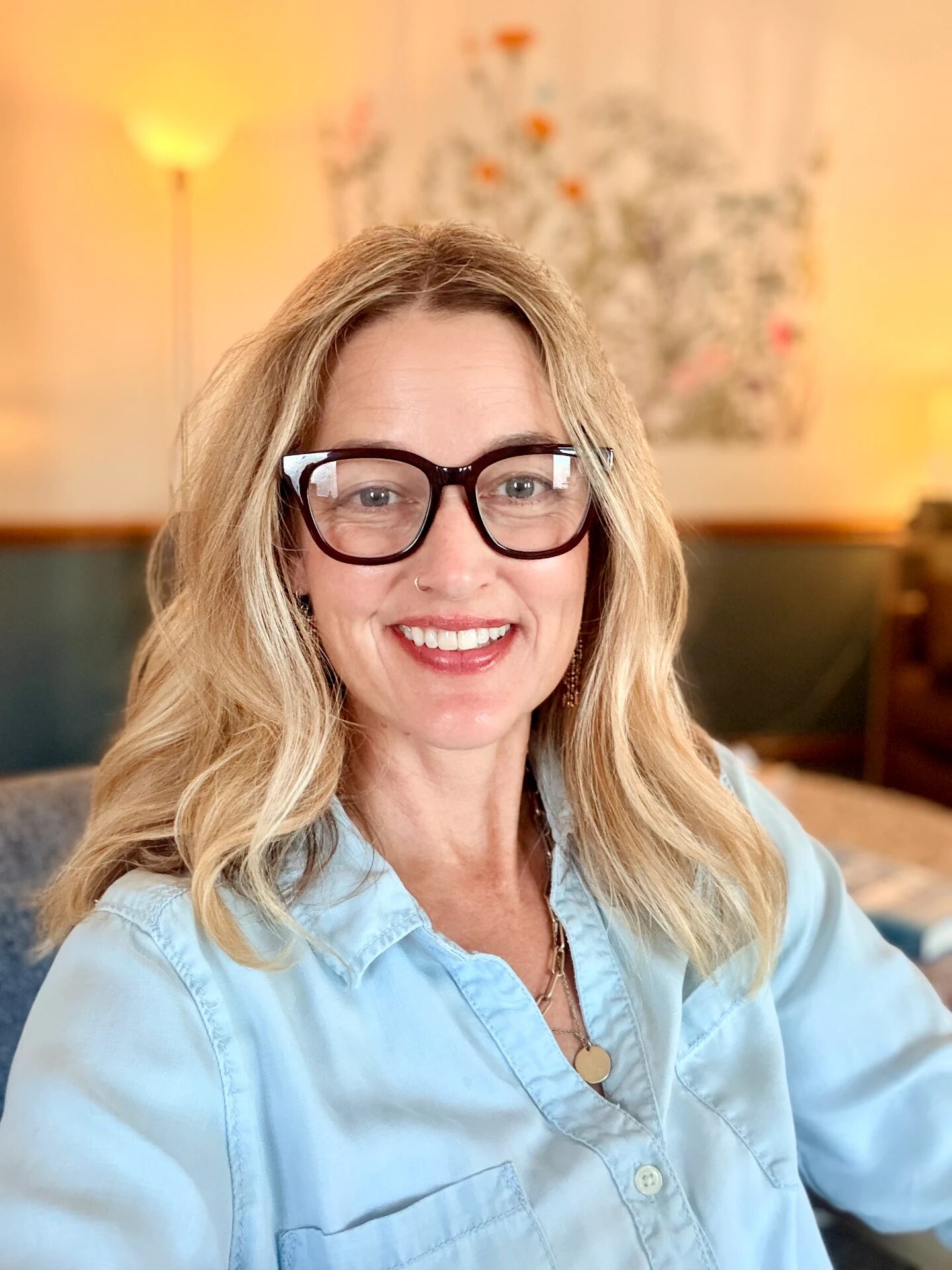
Amy Pescaglia, LPC, MEd, E-RYT
Meet Amy
Throughout her career in wellness and mental health, Amy has worked with individuals and families ages 5-84 to help them live a better-quality life through the practice of mindfulness and movement, used both as a tool and a preventative measure to support overall wellbeing. She has a heart for people and believes it is never too late to make positive changes to improve one's life. Amy also has experience as an Adjunct Professor teaching Stress Management to young adults.
Her clinical areas of interest include anxiety, OCD, depression, life transitions, stress management, body image, trauma, spirituality, parts work, and self-compassion. She draws on EMDR, ERP, somatic approaches, and neurodivergent-affirming care to meet clients where they are.
Amy practices from a wellness model and focuses on the whole person. She understands there are periods in one's life where one needs additional support to reclaim wellness for themselves. Through a client-centered approach, unconditional positive regard, and cognitive behavioral therapy, she supports her clients' growth towards a deeper understanding of themselves and a return to living beyond surviving. Amy works collaboratively with her clients to integrate these practices to meet their therapeutic goals.
Amy is a Licensed Professional Counselor (LPC) and an experienced yoga instructor (E-RYT500) through Yoga Alliance. She holds a master's certificate from the University of Missouri in Positive Psychology and is a graduate of Stephens College's Clinical Mental Health Counseling Program.
Licensed Professional Counselor (LPC)
Missouri license #2026031871
E-RYT
Experienced yoga instructor through Yoga Alliance
Positive Psychology
Master's certificate, University of Missouri
Stephens College
M.Ed., Clinical Mental Health Counseling
Areas of interest
Anxiety, OCD, depression, life transitions, stress management, body image, trauma, spirituality, parts work, and self-compassion.
Mindfulness & movement
Used both as a tool and a preventative measure to support overall wellbeing.
EMDR & ERP
Evidence-based approaches for trauma, anxiety, and OCD-spectrum concerns.
Neurodivergent-affirming
Care that meets clients where they are rather than forcing a single therapeutic mold.
Whole-person wellness model
Client-centered work grounded in unconditional positive regard and cognitive behavioral therapy.